


Emerging Technologies in Engineering Research: Key Areas for Future Innovation
Emerging Technologies in Engineering Research: Key Areas for Future Innovation in 2026
Engineering has always been at the forefront of human progress. From the industrial revolution to the digital age, technological advancements have continuously transformed industries, improved quality of life, and shaped the future of societies worldwide. Today, the pace of technological innovation is accelerating more rapidly than ever before, creating unprecedented opportunities for researchers, engineers, and academic institutions.
The engineering landscape is no longer confined to traditional disciplines. Emerging technologies are increasingly interdisciplinary, combining electrical engineering, mechanical engineering, computer science, materials science, environmental science, biotechnology, and data analytics to solve complex global challenges.
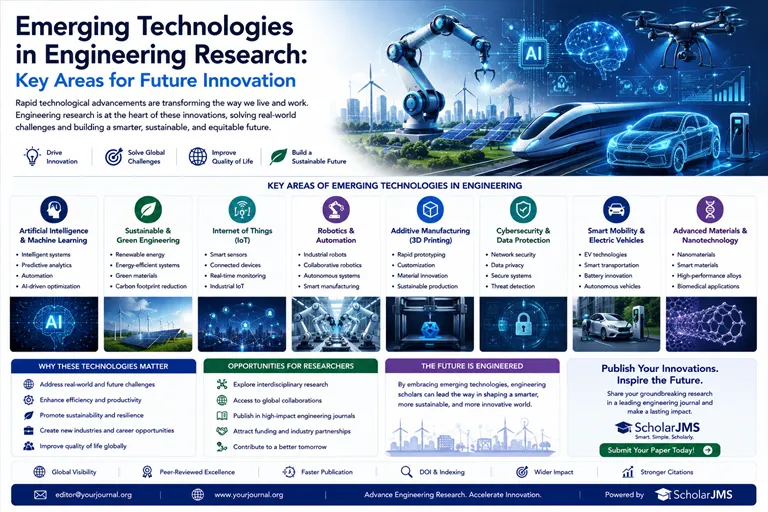
Artificial intelligence, renewable energy systems, digital manufacturing, advanced materials, and intelligent transportation technologies are redefining how engineers design, develop, and operate modern systems.
For progressive journals such as the Future Edge Journal of Progressive Research (FEJPR), understanding these emerging technologies is essential for identifying future research priorities and encouraging innovative scholarly contributions.
This article explores the most influential emerging technologies that are expected to shape engineering research and innovation throughout 2026 and beyond.
Why Emerging Technologies Matter in Engineering Research
Technological disruption is affecting every industrial sector.
Modern engineering research aims to address challenges related to:
- Climate change
- Energy security
- Sustainable development
- Healthcare accessibility
- Smart infrastructure
- Resource efficiency
- Industrial productivity
- Digital transformation
Emerging technologies provide engineers with new tools and methodologies for solving these challenges while creating opportunities for scientific discovery and economic growth.
1. Artificial Intelligence and Machine Learning
Artificial Intelligence (AI) has become one of the most transformative technologies of the modern era.
Engineering applications include:
- Predictive maintenance
- Autonomous systems
- Manufacturing optimization
- Intelligent control systems
- Design automation
- Energy management
- Computer vision
- Robotics
Machine learning algorithms enable engineers to analyze massive datasets, optimize complex systems, and improve decision-making processes.
Future Research Opportunities
- Explainable AI
- Engineering design automation
- AI-driven simulations
- Autonomous industrial systems
- Intelligent infrastructure management
AI is expected to remain one of the most active areas of engineering research in the coming decade.
2. Digital Twins and Virtual Engineering
Digital twin technology creates virtual representations of physical systems.
These digital models allow engineers to:
- Monitor performance
- Predict failures
- Optimize operations
- Simulate real-world conditions
- Improve maintenance planning
Applications
- Smart factories
- Power systems
- Transportation systems
- Healthcare engineering
- Aerospace systems
- Urban infrastructure
Digital twins are transforming engineering design, testing, and lifecycle management.
3. Internet of Things and Smart Connected Systems
The Internet of Things (IoT) enables devices and systems to communicate and exchange information in real time.
Applications include:
- Smart cities
- Industrial automation
- Environmental monitoring
- Smart agriculture
- Healthcare systems
- Intelligent transportation
Research Opportunities
- Edge computing
- Sensor technologies
- IoT cybersecurity
- Energy-efficient communication systems
- Smart infrastructure management
IoT technologies are increasingly integrated with artificial intelligence and cloud computing.
4. Renewable Energy and Smart Power Systems
The transition toward clean energy is driving significant technological innovation.
Research areas include:
- Solar energy systems
- Wind power technologies
- Smart grids
- Energy storage systems
- Hydrogen technologies
- Microgrids
Renewable energy engineering has become one of the most important fields for addressing global sustainability challenges.
5. Electric Vehicles and Intelligent Mobility
The transportation sector is undergoing a major transformation through:
- Electric vehicles
- Autonomous driving
- Vehicle-to-grid technologies
- Smart charging systems
- Intelligent transportation networks
Research Directions
- Battery technologies
- Power electronics
- Motor control systems
- Charging infrastructure
- Sustainable transportation systems
Electric mobility research continues to attract substantial global investment.
6. Advanced Materials and Nanotechnology
Materials science and nanotechnology are enabling the development of:
- Smart materials
- Self-healing materials
- Nanocomposites
- Lightweight structures
- Functional materials
- Energy materials
These technologies are revolutionizing industries such as aerospace, electronics, healthcare, and manufacturing.
7. Robotics and Autonomous Systems
Modern robotics combines:
- Artificial intelligence
- Machine vision
- Sensor technologies
- Machine learning
- Human-machine interaction
Applications
- Industrial automation
- Medical robotics
- Agricultural systems
- Construction technologies
- Logistics automation
Future research focuses on creating intelligent, adaptive, and collaborative robotic systems.
8. Additive Manufacturing and 3D Printing
Additive manufacturing has transformed product development and manufacturing processes.
Benefits include:
- Reduced material waste
- Customized production
- Rapid prototyping
- Lightweight structures
- Distributed manufacturing
Emerging research areas include:
- Metal additive manufacturing
- Bio-printing
- Sustainable materials
- Smart manufacturing systems
9. Quantum Computing and Quantum Technologies
Quantum computing has the potential to solve problems that are beyond the capabilities of traditional computing systems.
Future engineering applications may include:
- Material discovery
- Optimization problems
- Cryptography
- Drug development
- Complex simulations
Although still emerging, quantum technologies are expected to influence numerous engineering disciplines.
10. Cybersecurity and Cyber-Physical Systems
Increasing digitalization has created new security challenges.
Research areas include:
- Industrial cybersecurity
- Smart grid protection
- IoT security
- Secure communication systems
- Critical infrastructure protection
Cybersecurity is becoming a fundamental requirement for modern engineering systems.
11. Sustainable Manufacturing and Green Engineering
Sustainability has become a major priority for industries worldwide.
Research focuses on:
- Circular economy models
- Resource-efficient manufacturing
- Carbon-neutral technologies
- Renewable materials
- Green supply chains
Engineering innovation increasingly aims to balance productivity with environmental responsibility.
12. Biotechnology and Biomedical Engineering
The convergence of engineering and life sciences is creating remarkable innovations.
Research opportunities include:
- Medical devices
- Tissue engineering
- Biosensors
- Drug delivery systems
- Biomedical imaging
- Personalized healthcare technologies
Biomedical engineering is becoming increasingly interdisciplinary and technology-driven.
13. Blockchain and Decentralized Systems
Blockchain technology is finding applications beyond cryptocurrency.
Engineering applications include:
- Supply chain management
- Smart contracts
- Data security
- Energy trading systems
- Healthcare information systems
Researchers continue to explore new use cases across industrial sectors.
14. Edge Computing and High-Performance Computing
Modern engineering systems generate enormous amounts of data.
Emerging technologies such as:
- Edge computing
- Cloud computing
- High-performance computing
support:
- Real-time processing
- Simulation-based engineering
- Artificial intelligence applications
- Industrial automation
Computational engineering continues to evolve rapidly.
The Role of Interdisciplinary Research
One of the defining characteristics of emerging technologies is their interdisciplinary nature.
Future innovations increasingly require collaboration among:
- Electrical Engineers
- Mechanical Engineers
- Computer Scientists
- Environmental Scientists
- Materials Engineers
- Data Scientists
- Biomedical Researchers
- Industrial Engineers
Interdisciplinary research ecosystems often produce the most impactful technological breakthroughs.
Major Challenges Facing Emerging Technologies
Despite rapid progress, several challenges remain.
High Development Costs
Many advanced technologies require substantial investments.
Technical Complexity
Modern engineering systems involve multiple interconnected technologies.
Regulatory and Ethical Issues
Emerging technologies raise concerns related to:
- Privacy
- Safety
- Security
- Ethical governance
Skill Gaps
Industries increasingly require professionals with multidisciplinary expertise.
Sustainability Considerations
Future technologies must balance innovation with environmental responsibility.
Addressing these challenges represents a major opportunity for future engineering research.
Future Research Opportunities for Engineering Scholars
Several areas are expected to dominate future research agendas.
Artificial Intelligence and Autonomous Systems
Sustainable Energy Technologies
Smart Infrastructure and Digital Twins
Advanced Materials and Nanotechnology
Quantum Engineering
Sustainable Manufacturing
Human-Centered Robotics
Intelligent Transportation Systems
Biomedical Technologies
Cyber-Physical Security
These domains offer exciting opportunities for researchers, industries, and academic institutions.
Why Emerging Technologies Matter for Engineering Journals
Engineering journals play an important role in disseminating scientific discoveries and supporting technological progress.
As emerging technologies continue to reshape industries, journals that encourage interdisciplinary research can:
- Foster innovation
- Promote collaboration
- Accelerate knowledge transfer
- Support evidence-based technological development
The future of engineering research will increasingly depend on platforms that facilitate the exchange of ideas across traditional disciplinary boundaries.
Frequently Asked Questions
What are emerging technologies in engineering?
Emerging technologies are innovative technologies that have the potential to significantly influence industries and society in the future.
Why is interdisciplinary research important?
Many modern engineering challenges require expertise from multiple disciplines to develop effective solutions.
Which technologies are expected to grow rapidly?
Artificial intelligence, renewable energy, advanced materials, digital twins, and smart manufacturing are among the fastest-growing research areas.
Why should engineering researchers focus on emerging technologies?
These technologies offer significant opportunities for innovation, funding, collaboration, and industrial impact.
How can journals support emerging technology research?
Journals can provide platforms for publishing interdisciplinary research and encourage collaboration among researchers.
Conclusion
Emerging technologies are reshaping the future of engineering and creating unprecedented opportunities for scientific discovery and industrial transformation. Artificial intelligence, renewable energy, digital twins, advanced materials, robotics, and sustainable manufacturing are only a few of the technologies that will define the next era of engineering innovation.
As industries continue to evolve, engineering scholars must embrace interdisciplinary research, develop new skills, and contribute innovative solutions to global challenges.
The Future Edge Journal of Progressive Research (FEJPR) recognizes the importance of these emerging technologies and welcomes original research contributions that advance knowledge and promote innovation across engineering disciplines.
Submit Your Research to FEJPR
Researchers working in:
- Artificial Intelligence
- Renewable Energy Systems
- Smart Manufacturing
- Advanced Materials
- Digital Engineering
- Intelligent Transportation
- Robotics
- Sustainable Technologies
- Computational Engineering
- Interdisciplinary Engineering Research
are encouraged to submit their original research articles, review papers, and innovative studies to contribute to the future of engineering and technology.