


Renewable Energy and Power Systems Research: Opportunities for Engineering Scholars
Renewable Energy and Power Systems Research: Opportunities for Engineering Scholars in 2026
The global energy sector is undergoing a historic transformation. Rising energy demand, climate change concerns, environmental regulations, and rapid technological advancements are accelerating the transition from conventional fossil fuel-based energy systems toward cleaner and more sustainable energy solutions.
Renewable energy technologies such as solar, wind, hydropower, biomass, and hydrogen are becoming increasingly important in addressing global energy challenges. At the same time, modern power systems are evolving into intelligent, interconnected, and digitally managed networks capable of integrating diverse energy resources while maintaining reliability and efficiency.
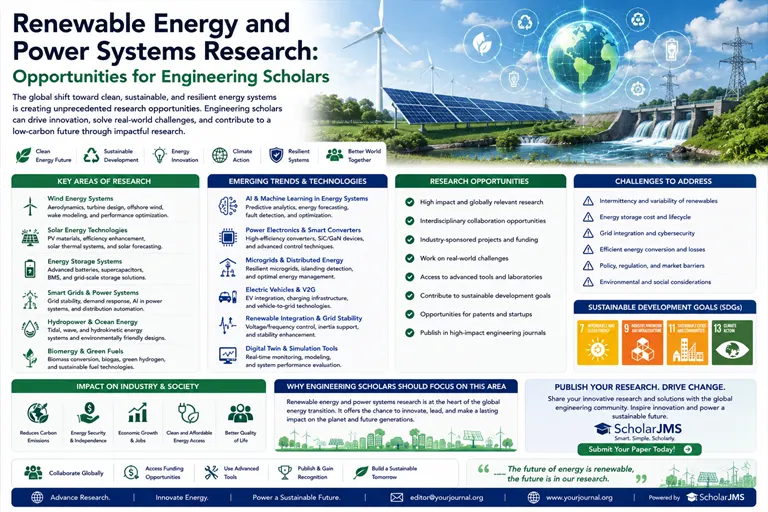
These developments have created enormous opportunities for engineering researchers. Renewable energy and power systems engineering have emerged as highly interdisciplinary fields that combine electrical engineering, electronics, computer science, artificial intelligence, materials science, environmental engineering, and data analytics.
For journals such as the Future Edge Journal of Progressive Research (FEJPR), renewable energy and power systems research represent critical areas for scientific innovation and technological advancement that will shape the future of sustainable development.
This article explores the latest trends and emerging research opportunities for engineering scholars in renewable energy and power systems.
Why Renewable Energy Research Matters
Global energy demand continues to increase due to:
- Population growth
- Industrial expansion
- Urbanization
- Digital transformation
- Electric mobility adoption
However, traditional energy systems face several challenges:
- Greenhouse gas emissions
- Resource depletion
- Air pollution
- Energy security concerns
- Climate change impacts
Renewable energy technologies offer opportunities to:
- Reduce carbon emissions
- Improve energy security
- Increase energy access
- Support sustainable development
- Enhance environmental protection
Consequently, renewable energy research has become one of the most important priorities in modern engineering.
Understanding Modern Power Systems
A power system consists of:
- Power generation
- Transmission systems
- Distribution networks
- Energy storage systems
- Load management
- Monitoring and control systems
Traditional power grids were designed around centralized generation systems.
Modern power systems increasingly incorporate:
- Distributed energy resources
- Renewable generation
- Smart technologies
- Digital monitoring systems
- Energy storage solutions
- Intelligent control algorithms
These transformations have created numerous research opportunities for engineers and scientists.
Emerging Renewable Energy Technologies
1. Solar Energy Systems
Solar energy remains one of the fastest-growing renewable technologies worldwide.
Research areas include:
- High-efficiency photovoltaic cells
- Perovskite solar cells
- Floating solar systems
- Building-integrated photovoltaics
- Solar tracking technologies
- Hybrid solar systems
Future Research Opportunities
- AI-based solar forecasting
- Advanced photovoltaic materials
- Smart solar grid integration
- Solar-powered microgrids
- Energy storage optimization
Solar engineering research continues to attract significant academic and industrial interest.
2. Wind Energy Technologies
Wind power has become an essential component of global renewable energy strategies.
Current research focuses on:
- Offshore wind systems
- Floating wind turbines
- Smart turbine control
- Predictive maintenance
- Wind forecasting technologies
Engineering Challenges
- Grid integration
- Power quality
- Turbine reliability
- Environmental impacts
- Storage requirements
Researchers continue to develop innovative solutions to improve wind energy efficiency and reliability.
3. Hydropower and Marine Energy
Hydropower remains one of the world's largest renewable energy sources.
Emerging research areas include:
- Small hydropower systems
- Tidal energy
- Wave energy conversion
- Hydrokinetic technologies
- Hybrid renewable systems
Marine energy technologies offer significant opportunities for future engineering research.
4. Biomass and Bioenergy Systems
Biomass technologies contribute to:
- Waste management
- Rural electrification
- Carbon reduction
- Circular economy initiatives
Research opportunities include:
- Biofuel production
- Waste-to-energy technologies
- Biomass gasification
- Bioenergy optimization
- Sustainable feedstock management
5. Green Hydrogen Technologies
Hydrogen is increasingly recognized as a future clean energy carrier.
Research areas include:
- Electrolysis technologies
- Hydrogen storage systems
- Fuel cells
- Hydrogen transportation
- Hydrogen-powered industries
Green hydrogen is expected to play a major role in decarbonizing industrial sectors and transportation systems.
Smart Grids: The Future of Power Systems
Traditional electrical grids were not designed to accommodate large-scale renewable integration.
Smart grids use advanced technologies such as:
- Sensors
- Communication systems
- Artificial Intelligence
- Automation
- Internet of Things devices
- Data analytics
Benefits of Smart Grids
- Improved reliability
- Better energy management
- Enhanced efficiency
- Faster fault detection
- Renewable integration capabilities
- Consumer participation
Smart grid research is among the most rapidly expanding areas of electrical engineering.
Energy Storage Systems: A Critical Research Area
Renewable energy sources are often intermittent.
Energy storage technologies help address this challenge.
Major research areas include:
- Lithium-ion batteries
- Solid-state batteries
- Flow batteries
- Supercapacitors
- Hydrogen storage
- Thermal energy storage
Key Research Objectives
- Improve efficiency
- Increase storage capacity
- Reduce costs
- Enhance safety
- Extend operational life
Energy storage remains one of the most important enabling technologies for future renewable energy systems.
Microgrids and Distributed Energy Systems
Microgrids are localized energy systems that can operate independently or alongside the main grid.
Research opportunities include:
- Renewable microgrids
- Rural electrification
- Smart energy management
- Community energy systems
- Hybrid energy systems
Microgrids play an essential role in improving energy resilience and reliability.
Artificial Intelligence in Renewable Energy Research
Artificial Intelligence is revolutionizing energy systems engineering.
Applications Include
- Energy demand forecasting
- Renewable generation prediction
- Fault diagnosis
- Predictive maintenance
- Energy optimization
- Smart grid management
Machine learning algorithms are increasingly being integrated into power system operations.
Internet of Things in Power Systems
IoT technologies enable:
- Real-time monitoring
- Smart metering
- Asset management
- Grid automation
- Energy optimization
IoT-based energy systems are expected to become increasingly important in future power infrastructure.
Digital Twins and Power System Simulation
Digital twin technologies create virtual models of energy systems.
Researchers use digital twins for:
- Grid monitoring
- Fault analysis
- System optimization
- Renewable integration studies
- Maintenance planning
Simulation-based energy research is accelerating innovation while reducing development costs.
Electric Vehicles and Power System Integration
The growth of electric vehicles is creating new research opportunities.
Areas of study include:
- Smart charging infrastructure
- Vehicle-to-grid technologies
- Battery management systems
- Charging optimization
- Grid stability analysis
Electric mobility and renewable energy systems are becoming increasingly interconnected.
Cybersecurity Challenges in Modern Power Systems
Digitalization has introduced new security concerns.
Research topics include:
- Smart grid security
- Data protection
- Secure communication protocols
- Grid resilience
- Cyber-physical systems
Cybersecurity has become an important component of power systems research.
Sustainable Power System Planning
Future energy systems must address:
- Economic efficiency
- Environmental sustainability
- Social responsibility
- Energy equity
- Long-term resilience
Researchers are developing new methodologies to design sustainable and intelligent energy infrastructures.
Major Research Opportunities for Engineering Scholars
Several research domains offer substantial opportunities for future investigation.
Renewable Energy Forecasting
Using AI and machine learning to predict renewable energy generation.
Hybrid Energy Systems
Combining multiple renewable sources for greater reliability.
Smart Grid Optimization
Developing intelligent energy management algorithms.
Advanced Energy Storage Technologies
Designing next-generation batteries and storage systems.
Hydrogen Economy Research
Developing sustainable hydrogen production and utilization technologies.
Carbon-Neutral Energy Systems
Creating low-emission energy infrastructures.
Sustainable Rural Electrification
Improving energy access in underserved communities.
AI-Driven Power System Management
Integrating intelligent technologies into grid operations.
Challenges Facing Renewable Energy Research
Despite significant progress, several challenges remain.
Energy Storage Limitations
Large-scale storage systems remain expensive.
Grid Integration Complexity
Managing renewable intermittency requires sophisticated solutions.
Infrastructure Costs
Renewable energy projects often require significant investments.
Regulatory Challenges
Energy policies continue to evolve globally.
Technical Skill Requirements
Interdisciplinary expertise is increasingly necessary.
These challenges create numerous opportunities for future engineering research and innovation.
Why Renewable Energy Research Is Highly Interdisciplinary
Renewable energy systems require collaboration among:
- Electrical Engineers
- Mechanical Engineers
- Computer Scientists
- Environmental Engineers
- Materials Scientists
- Data Scientists
- Economists
- Policy Researchers
Interdisciplinary research is essential for solving complex energy challenges and developing sustainable technologies.
Opportunities for Publishing and Academic Collaboration
The rapid evolution of renewable energy technologies has created increasing demand for high-quality scholarly publications.
Research contributions in:
- Solar Energy
- Wind Power
- Smart Grids
- Energy Storage
- Electric Mobility
- Hydrogen Technologies
- Sustainable Power Systems
- AI Applications in Energy
are expected to grow substantially over the coming decade.
Engineering journals that promote interdisciplinary energy research can make meaningful contributions toward global sustainability and technological innovation.
Frequently Asked Questions
Why is renewable energy research important?
Renewable energy research supports sustainable development, reduces environmental impacts, and improves global energy security.
What are the major research areas in power systems engineering?
Smart grids, energy storage, renewable integration, AI applications, microgrids, and cybersecurity are among the major research areas.
Why are energy storage systems important?
Storage technologies help address the intermittent nature of renewable energy generation.
How is artificial intelligence used in power systems?
AI supports forecasting, optimization, predictive maintenance, and intelligent energy management.
What is the future of power systems engineering?
Future power systems will likely be intelligent, decentralized, digital, and increasingly powered by renewable energy sources.
Conclusion
Renewable energy and power systems engineering are among the most dynamic and influential fields shaping the future of sustainable development. Advances in solar technologies, smart grids, energy storage, hydrogen systems, artificial intelligence, and digital energy infrastructure are creating unprecedented opportunities for engineering innovation.
As countries pursue decarbonization and energy transition goals, engineering researchers will play a critical role in developing technologies that enable cleaner, more resilient, and intelligent energy systems.
The Future Edge Journal of Progressive Research (FEJPR) recognizes the importance of renewable energy and power systems research and welcomes original contributions that address emerging challenges and opportunities in sustainable energy engineering.
Submit Your Research to FEJPR
Researchers working in:
- Renewable Energy Systems
- Power Systems Engineering
- Smart Grids
- Energy Storage Technologies
- Electric Mobility
- Hydrogen Energy
- Sustainable Energy Systems
- AI Applications in Energy
are encouraged to submit their original research, review articles, and interdisciplinary studies that contribute to the future of global energy sustainability.